The Greenhouse Gas Protocol (GHG Protocol) Corporate Standard is undergoing its first major revision in over a decade, and two of the most recently proposed updates are worth paying close attention to.
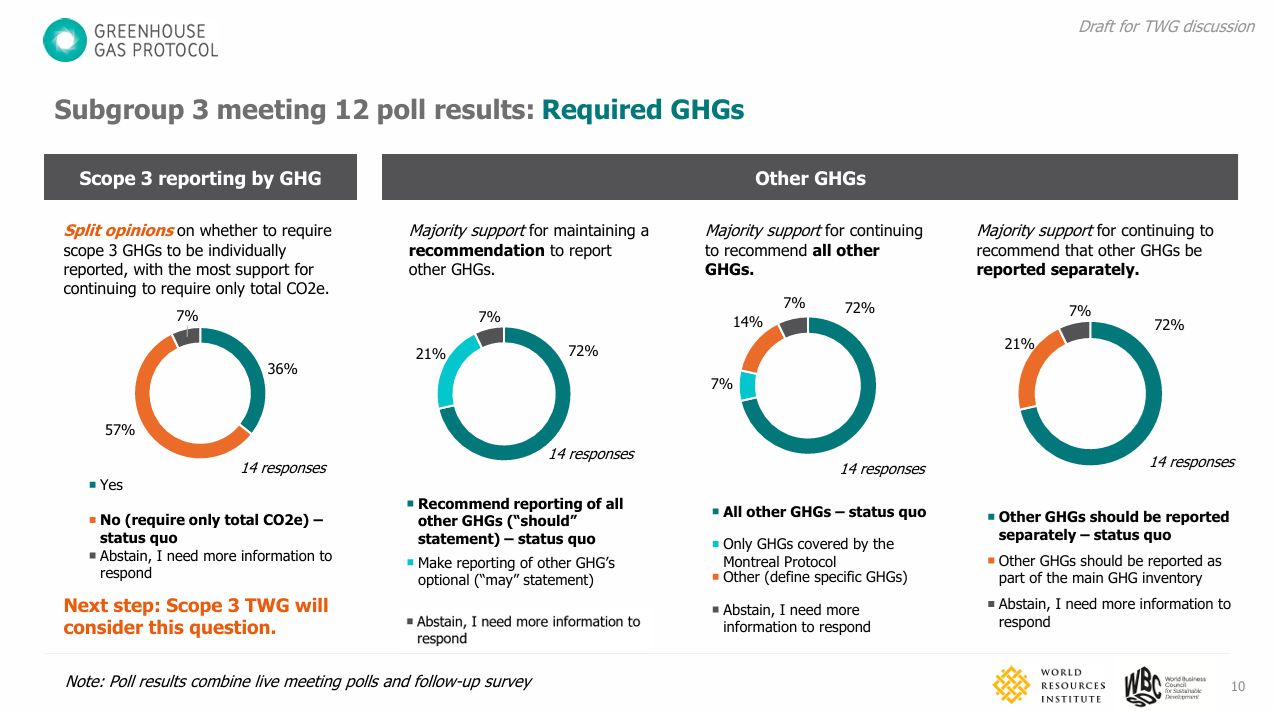
First: requiring companies to report primary greenhouse gases individually (e.g. methane, nitrous oxide, refrigerants, etc.) rather than simply rolling everything into a single CO2-equivalent figure for Scope 3 emissions.
This level of granularity gives a far more accurate picture of where climate impact is actually coming from, allowing for more targeted action within supply-chain emissions mitigations.
Second: disaggregating Scope 1 Emissions into broad operational categories (e.g. stationary combustion, mobile combustion, fugitive emissions, and process emissions). Rather than treating Scope 1 as a single number, this breakdown connects emissions directly to the operational decisions that drive them.
Both of these are things we've been doing at Three Pillars Consulting (TPC) for our clients as standard practice. Separating emissions by source and by gas is what makes the data useful. When a management team can see that a meaningful share of their Scope 1 footprint is fugitive rather than fuel-related, or that a specific supply chain activity carries an outsized methane burden, they can act on it. This becomes even more apparent after consecutive rounds of reporting and watching the trends across each category over time.
If your organization is preparing for these potential standard changes, or simply wants its GHG inventory to be more decision-ready today, we're happy to have that conversation.